



Heated Stainless Steel IBC – Solving the “Won’t Flow” Problem


Some liquids flow easily. Water, solvents, thin oils – no problem. But honey? Chocolate? Molten wax? Palm oil in winter? They don’t flow. They sit in the tank like solid rock.
That’s where a heated stainless steel ibc comes in. An IBC Tank with a heating jacket keeps viscous products warm, so they pour out when you need them.
We’ve built heated stainless steel ibc tanks for candy makers, biodiesel plants, resin manufacturers, and food processors. This guide explains your options – steam vs electric, insulation levels, and which products need which heat.
See our heated stainless steel IBC for viscous liquid storage applications.

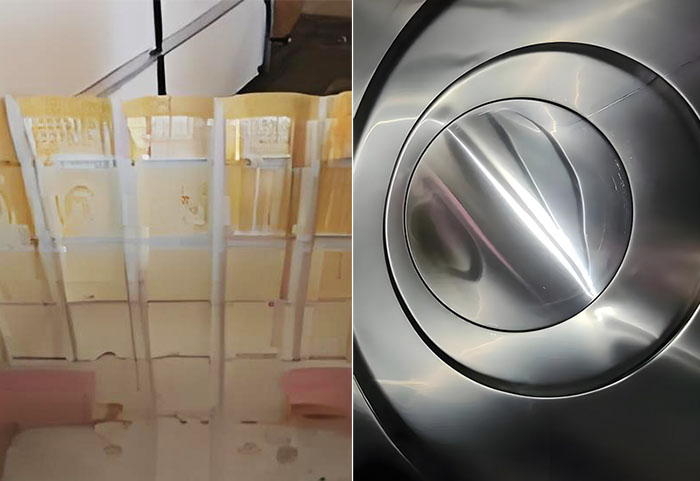
Heat the stainless steel IBC bottom plate
1. What Products Need a Heated Stainless Steel IBC?
Any liquid that thickens or solidifies at room temperature is a candidate. We see heated stainless steel ibc used for:
Product Type | Why It Needs Heat | Typical Temperature |
|---|---|---|
Honey | Crystallizes below 30°C | 35-40°C |
Palm oil | Solid below 35°C | 40-50°C |
Chocolate | Solid at room temp | 45-50°C |
Molten wax | Solid below 60°C | 65-80°C |
Resin / adhesive | Too thick to pump | 50-70°C |
Biodiesel | Can gel in cold weather | 30-40°C |
Molasses | High viscosity at room temp | 35-45°C |
Without heat, these products either won’t leave the tank or take hours to drain. A heated stainless steel ibc solves that with a jacketed design and insulation.
A honey packer in Texas told us: “Before heated IBCs, we spent mornings waiting for honey to soften. Now we pump immediately. Saved two hours every day.”

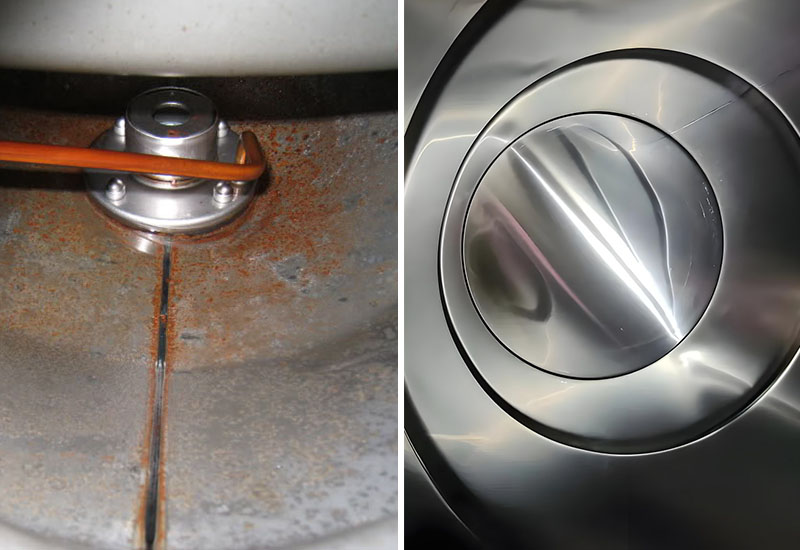
Detail display of heated stainless steel IBC bottom plate
2. Heating Options: Steam Jacket vs Electric Heating
We offer two main heating methods for heated stainless steel ibc tanks. Each has pros and cons.
Steam Jacketed IBC Tank
How it works: Steam flows through channels welded to the outside of the tank. Heat transfers through the stainless steel wall into the product.
Pros | Cons |
|---|---|
Fast heating | Requires steam boiler on site |
Even heat distribution | Higher installation cost |
Good for high temperatures (up to 150°C) | Not portable |
Lower operating cost (if steam is available) |
Best for: Factories that already have steam – food plants, chemical plants, refineries.
Electric Heating Jacket IBC
How it works: Electrical resistance heating elements wrap around the tank, controlled by a thermostat.
Pros | Cons |
|---|---|
No boiler needed | Slower heating than steam |
Portable – move tank anywhere with power | Higher electricity cost |
Precise temperature control (±1°C) | Limited to about 80-100°C |
Lower upfront investment |
Best for: Small to medium operations, R&D, or facilities without steam.
Compare steam jacketed vs electric heated IBC tanks for your application.

Actual photo of heated stainless steel IBC bottom plate
3. Insulation: Why It Matters
A heated stainless steel ibc without insulation is like a coffee cup without a sleeve – heat escapes fast.
We add insulation layers between the tank wall and the outer cladding. Typical insulation materials:
Rock wool – good for high temperatures (up to 250°C)
Polyurethane foam – better insulation, but lower temperature limit (about 80°C)
Vacuum insulation panels – highest efficiency, but expensive
Benefits of insulation:
Reduces energy consumption by 40-60%
Maintains product temperature longer during power loss
Protects operators from hot surfaces (safety)
Standard vs insulated: An uninsulated IBC Tank with a heating jacket loses heat quickly. If you need to hold temperature for hours or days, insulation is essential.
4. Capacity Options: 500L to 1500L
We manufacture heated stainless steel ibc tanks in all standard capacities:
Capacity | Typical Use | Heating Power Needed |
|---|---|---|
500L | R&D, small-batch specialty products | 2-3 kW electric / 50 kg/hr steam |
1000L | Standard production | 4-6 kW electric / 100 kg/hr steam |
1200L | High-volume shipping (same footprint) | 5-7 kW electric / 120 kg/hr steam |
1500L | Stationary storage | 6-8 kW electric / 150 kg/hr steam |
All capacities available with either steam jacket or electric heating. Lead time for custom heated stainless steel ibc is typically 25-35 working days.
Browse all heated IBC tanks by capacity – from 500L to 1500L.
5. Control Options: Keeping the Right Temperature
A heated stainless steel ibc is only useful if you can control the temperature.
Basic control: Manual on/off valve or switch. Operators turn heat on when needed, off when not.
Thermostatic control: Set a target temperature. The system maintains it automatically. Includes a temperature sensor and controller.
PID control (precision): For products sensitive to overheating. Maintains temperature within ±1°C. Includes digital display, data logging, and alarms.
Most food and pharma customers choose PID control. A chocolate manufacturer told us: “If chocolate exceeds 50°C, it separates. PID control keeps it exactly at 48°C. Perfect every batch.”
6. Safety Features
Heating tanks adds risk. Our heated stainless steel ibc includes:
Over-temperature protection – shuts off heat if sensor fails
Pressure relief valve – prevents overpressure from boiling
Insulated outer cladding – surface temperature below 50°C for operator safety
Thermal fuses – one-time protection if thermostat fails
For hazardous areas, we offer explosion-proof heating elements and controllers (ATEX / NEC certified).
7. Common Mistakes We See
Mistake #1: Buying a heated IBC without calculating heat loss
Not every application needs a full jacket. Sometimes trace heating is enough.
Mistake #2: Choosing electric when steam is available
Steam is usually cheaper to run. If you already have a boiler, steam jacketed is almost always better.
Mistake #3: No insulation
Without insulation, you’re paying to heat the room, not the product.
Mistake #4: Wrong temperature control
Manual control works for some products, but PID is worth the extra cost for temperature-sensitive materials.
8. Summary: Which Heated IBC Do You Need?
Your Situation | Recommendation |
|---|---|
You have steam on site | Steam jacketed IBC tank |
No steam, need portability | Electric heating jacket IBC |
Holding temperature for hours/days | Add insulation |
Precise temperature critical | PID control |
Hazardous area | Explosion-proof heating |
Occasional heating, short time | No insulation, manual control |
Need a Heated Stainless Steel IBC?
We’ve built heated stainless steel ibc tanks for honey, chocolate, palm oil, wax, resin, and biodiesel. Tell us your product, target temperature, and how long it needs to stay hot.
We’ll recommend the right heating method, insulation level, and control system – no upselling.
By Fulait Engineering Team
Shijiazhuang Fulait Packaging Co., LTD
Related Blogs
-
 Food grade 304 stainless steel IBC for beverages, edible oils, syrups, and dairy. Mirror-polished interior (Ra ≤ 0.8µm), FDA certified, full documentation. Used by juice plants, dairies, and breweries worldwide.Technical Articles
 -
 By the team at Shijiazhuang Fulait Packaging Co., LTDI'll be honest: most IBC cleaning guides online are useless.They tell you to "use appropriate cleaning solutions" and "rinse thoroughly." No kidding.Here's the real deal—what we've learned from watching customers ruin tanks, save tanks, and everytTechnical Articles
 -
 316 stainless steel IBC vs sanitary stainless steel IBC – what’s the difference? One is about material chemistry, the other about surface finish. This guide helps you choose the right spec for pharma, chemical, and food applications.Technical Articles
