



304, 316 or Plastic? – Chemical Industry Material Selection Guide


Introduction: Why This Guide Exists
In twelve years of supplying stainless steel IBCs to 23 countries, I’ve seen the same mistake more times than I can count.
A buyer chooses 304 because it’s cheaper. A year later, they’re replacing pitted tanks. Or they choose 316 “just to be safe” and pay 40% more than they needed to. Or they choose plastic to save money upfront, only to replace every unit three years later.
This guide exists to stop that guessing game.
It’s not a marketing brochure. I sell 304, 316, and plastic IBCs. I don’t care which one you buy – as long as it’s the right one for your liquid.
Here’s what this guide covers:
Corrosion mechanisms (why materials fail)
Chemical compatibility data (what works with what)
Temperature and concentration limits (when “safe” becomes “dangerous”)
Real customer case studies (both good and bad decisions)
Regulations and certifications (FDA, UN, ASME, NACE)
Physical performance (weight, impact, UV resistance)
Total cost of ownership (10-year comparison)
A simple corrosion test you can do yourself
A selection flow chart (yes/no questions)
A supplier verification checklist
Let’s start with the most important question.
Chapter 1: Three Questions – Answer These Before You Read Anything Else
I don’t care if you remember the rest of this guide. Remember these three questions.
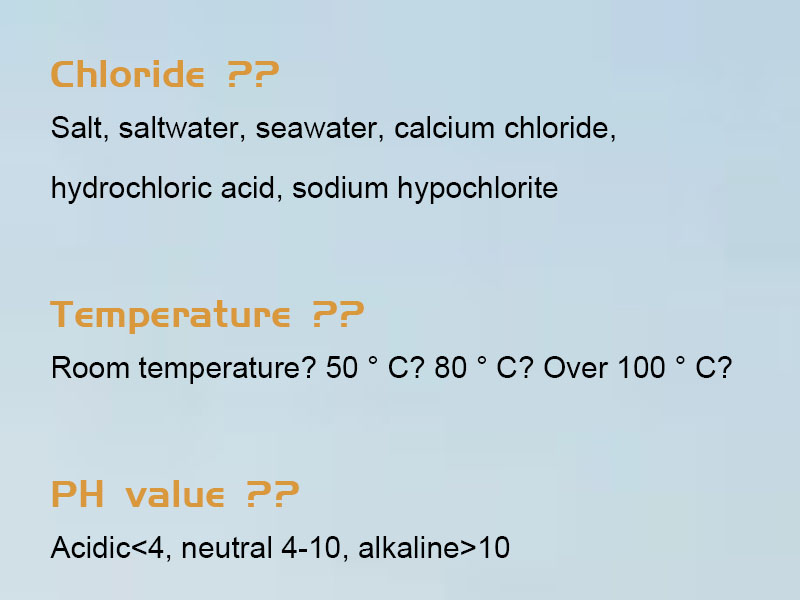
Question 1: Does your liquid contain chlorides?
(Chlorides = chlorine ions. Examples: salt, brine, seawater, calcium chloride, hydrochloric acid, sodium hypochlorite.)
Question 2: What’s the temperature?
(Room temperature? 50°C? 80°C? Above 100°C?)
Question 3: What’s the pH?
(Acidic <4, neutral 4-10, alkaline >10)
Write the answers down. Everything that follows depends on them.
Chapter 2: Corrosion Mechanisms – Why Materials Fail (And How They Fail Differently)
Understanding why a material fails helps you choose the right one before failure happens.
304 Stainless Steel – Pitting Corrosion
304 contains 18% chromium and 8% nickel. The chromium forms a passive oxide layer that protects the steel.
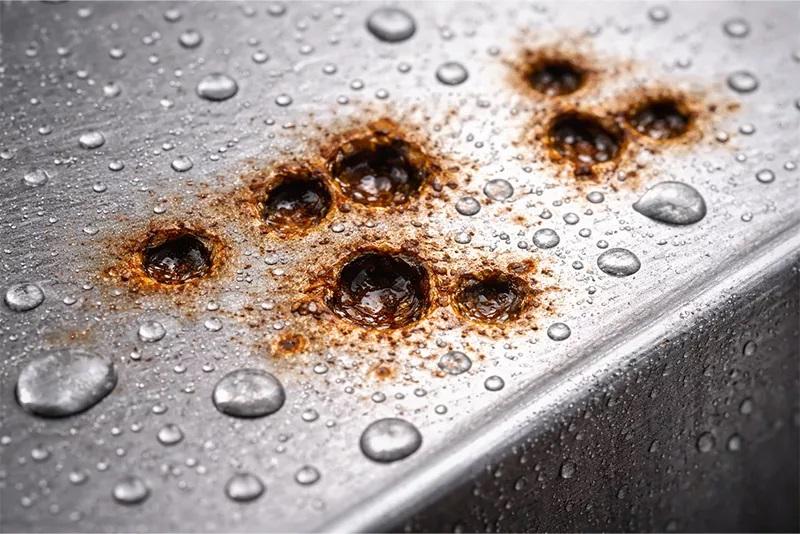
Chlorides attack this layer. Once breached, a tiny pit forms. The pit grows inward. The top stays intact. You can’t see the damage until it’s too late.
What pitting looks like: Small dark holes, often around welds or crevices. Under a microscope, they look like volcanoes.
Which liquids cause pitting:
Sodium chloride (salt water, brine) – pitting within 1-3 years
Calcium chloride – pitting within 1-2 years
Sodium hypochlorite (bleach) – pitting within 6-18 months
Hydrochloric acid (any concentration) – rapid attack, months not years
Reference standard: ASTM G48 – Standard test method for pitting resistance
316 Stainless Steel – Resists Pitting But Not Invincible
316 adds 2% molybdenum to the 304 formula. Molybdenum stabilizes the passive layer in chloride environments.
How much better is 316?
In 3.5% sodium chloride solution (seawater concentration), 304 pits at room temperature within months. 316 can last years – sometimes decades.
But 316 has limits. Above 50°C, even 316 will pit in high-chloride environments. Above 80°C, the risk accelerates significantly.
Reference standard: ASTM G48 – same test, different pass/fail threshold
Plastic (HDPE) – No Corrosion, But Other Failure Modes
HDPE doesn’t corrode. It’s chemically inert to most acids, alkalis, and salt solutions.
But HDPE fails in other ways:
UV degradation: Sunlight breaks polymer chains. After 2-3 years of outdoor exposure, HDPE becomes brittle. Crack under stress.
Thermal deformation: Above 60°C, HDPE softens. Above 70-80°C, it deforms permanently. I’ve seen IBCs with melted valve housings.
Solvent swelling: Some organic solvents (toluene, xylene, acetone) penetrate HDPE, causing it to swell and lose mechanical strength.
Stress cracking: Certain chemicals (including some detergents) cause HDPE to crack under stress – even at room temperature.
Chapter 3: Chemical Compatibility Data – What Works With What
This is the most referenced section of this guide. Bookmark it.
3.1 Chloride-Containing Liquids
Liquid | Concentration | Temp | 304 | 316 | HDPE | Notes |
|---|---|---|---|---|---|---|
Sodium chloride (brine) | Any | Ambient | ❌ | ✅ | ✅ | 304 pits within 1-3 years |
Seawater | Natural | Ambient | ❌ | ✅ | ✅ | Same as brine |
Calcium chloride | Any | Ambient | ❌ | ✅ | ✅ | Common de-icing chemical |
Sodium hypochlorite | 10-15% | Ambient | ❌ | ✅ | ✅ | 304 pits rapidly |
Sodium hypochlorite | 10-15% | 40°C | ❌ | ⚠️ | ❌ | 316 at limit; HDPE softens |
Hydrochloric acid | ≤20% | Ambient | ❌ | ❌ | ✅ | Don’t use stainless at all |
Hydrochloric acid | >20% | Ambient | ❌ | ❌ | ⚠️ | HDPE borderline; consult us |
Real case – chloride mistake: Chemical distributor in Ohio used 304 for calcium chloride brine. Eight months later, five of ten IBCs leaked from pitting. Replaced with 316. Still running six years later.
3.2 Acids (No Chlorides)
Liquid | Concentration | Temp | 304 | 316 | HDPE | Notes |
|---|---|---|---|---|---|---|
Sulfuric acid | ≤20% | Ambient | ✅ | ✅ | ✅ | All three work |
Sulfuric acid | 20-50% | Ambient | ❌ | ⚠️ | ✅ | 304 fails; 316 borderline |
Sulfuric acid | 98% | Ambient | ❌ | ❌ | ✅ | Only plastic or carbon steel |
Sulfuric acid | Any | >50°C | ❌ | ❌ | ❌ | Need special alloy |
Phosphoric acid | ≤85% | Ambient | ⚠️ | ✅ | ✅ | 304 borderline at higher concentration |
Nitric acid | ≤40% | Ambient | ✅ | ✅ | ❌ | HDPE not recommended |
Acetic acid | ≤50% | Ambient | ⚠️ | ✅ | ✅ | 304 borderline |
Citric acid | Food grade | Ambient | ✅ | ✅ | ✅ | 304 is fine |
Real case – acid done right: Condiment factory stores vinegar (acetic acid, 5-10%, ambient) in 304 IBCs. Nearly ten years. No corrosion. They didn’t need 316.
Why Food Processors Are Switching From Plastic To Stainless Steel IBCs
3.3 Alkalis
Liquid | Concentration | Temp | 304 | 316 | HDPE | Notes |
|---|---|---|---|---|---|---|
Sodium hydroxide | ≤30% | Ambient | ✅ | ✅ | ✅ | 304 is best value |
Sodium hydroxide | ≤30% | 50°C | ⚠️ | ✅ | ✅ | Stress cracking risk for 304 |
Sodium hydroxide | >30% | Ambient | ⚠️ | ✅ | ✅ | 304 borderline |
Sodium hydroxide | >30% | >50°C | ❌ | ⚠️ | ❌ | High risk for all |
Warning: Hot, concentrated caustic causes stress corrosion cracking in 304. Not pitting – cracks. More dangerous because it can fail suddenly without visible warning.
3.4 Organic Solvents
Solvent | 304 | 316 | HDPE | Notes |
|---|---|---|---|---|
Methanol, ethanol | ✅ | ✅ | ✅ | All work |
Acetone | ✅ | ✅ | ⚠️ | HDPE may swell |
Toluene, xylene | ✅ | ✅ | ❌ | HDPE not suitable – dissolves |
Ethyl acetate | ✅ | ✅ | ⚠️ | HDPE may swell |
Real case – solvent success: Paint manufacturer stores xylene in 304 IBCs. Six years. No corrosion. 304 is more than enough for most organic solvents.
Chapter 4: Temperature and Concentration – The Hidden Variables
Most buyers ask “is 304 compatible with acetic acid?” That’s the wrong question.
The right question is: “Is 304 compatible with acetic acid at 50°C and 30% concentration?”
Temperature and concentration change everything.
Rule of thumb for 304: For every 10°C increase in temperature, corrosion rate roughly doubles. A liquid that’s safe at room temperature may become aggressive at 50°C.
Example – sulfuric acid: At 20°C, 304 handles up to 20% concentration. At 60°C, the safe limit drops to 5% or less.
Reference standards: NACE MR0175 (sulfide stress cracking), ASTM G31 (laboratory immersion corrosion testing)
Chapter 5: Regulations and Certifications – What Your Auditor Will Ask
If you’re in chemical industry, your tanks need to meet certain standards.
Regulation | Applies to | What it requires |
|---|---|---|
UN/DOT | Hazardous material transport | Certified IBC design, test certificate, proper markings |
ASME Section VIII | Pressure vessels | Pressure-rated design, certified welders, nameplate |
ISO 9001 | Quality management | Traceable materials, documented processes |
NACE | Sour service (H₂S) | Special material and testing requirements |
What to ask your supplier:
Can you provide 3.1 material certificates traceable to the original mill heat number?
Do you have UN certification for hazardous liquid transport?
Are your welders certified for pressure vessel work?
I provide all of these for every IBC we ship. If a supplier can’t or won’t, that’s a red flag.
Get to know our certifications and factories
Chapter 6: Physical Performance – Beyond Chemical Compatibility
Sometimes the right material chemically is wrong physically.
Property | 304/316 | HDPE |
|---|---|---|
Weight (1000L IBC) | ~80-100 kg | ~55-65 kg |
Impact resistance | Dents but rarely leaks | Cracks when cold, UV-aged |
UV resistance | Excellent – no degradation | Poor – becomes brittle in 2-3 years |
Max continuous temp | 400°C+ | 60°C |
Stacking strength | Excellent – 2-3 high | Good – 2 high when new |
Repairability | Welds can be ground, re-polished | Not repairable |
Real trade-off: A customer in Florida stores water treatment chemicals outdoors. Plastic IBCs cracked after two summers. Switched to 304. Five years later, still fine. Pay more upfront or pay twice.
Chapter 7: Total Cost of Ownership – What 10 Years Really Costs
Let’s run real numbers. A chemical plant needs 100 IBCs for 10 years.
Option A: Plastic IBCs
Year | Cost |
|---|---|
Year 0 | 100 × $400 = $40,000 |
Year 4 | Replace 100 units = $40,000 |
Year 8 | Replace 100 units = $40,000 |
10-year purchase cost | $120,000 |
Maintenance (valves, gaskets) | $5,000 |
Total cost | $125,000 |
Option B: 304 Stainless Steel IBC
Year | Cost |
|---|---|
Year 0 | 100 × $900 = $90,000 |
Year 4 | $0 (still in service) |
Year 8 | $0 (still in service) |
10-year purchase cost | $90,000 |
Maintenance (valves, gaskets) | $10,000 |
Resale value after 10 years (30%) | -$27,000 |
Total cost | $73,000 |
Savings with stainless: $52,000 over 10 years.
That’s not “stainless is expensive.” That’s “plastic is expensive over time.”
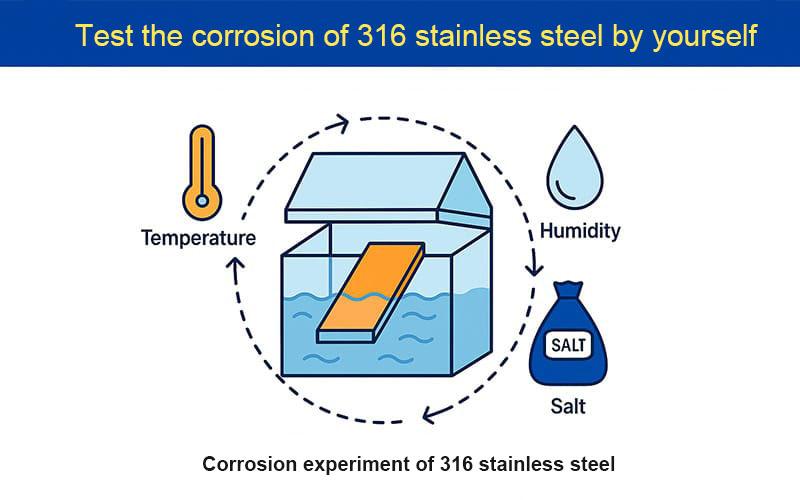
Chapter 8: A Simple Corrosion Test You Can Do Yourself
Stop guessing. Do this test.
What you need:
A small piece of 316 stainless steel (I can mail you a sample coupon)
A glass jar
Your liquid
Steps:
Put the 316 coupon in the jar.
Pour your liquid over it.
Leave it for 7 days at room temperature.
Take it out. Look for pits, dark spots, or rust.
What the results mean:
Result | What to do |
|---|---|
No visible change | 304 will probably work. |
Slight discoloration | Consider 316. |
Pitting or rust | 316 required. Or use plastic. |
I’ve used this test with dozens of customers. It’s cheap. It’s honest. And it never lies.
Chapter 9: Selection Flow Chart – Answer These Yes/No Questions
Follow this sequence:
Q1: Does your liquid contain chlorides?
→ Yes: 316 or plastic. → No: go to Q2.
Q2: Is temperature above 60°C?
→ Yes: 304 or 316 (not plastic). → No: go to Q3.
Q3: Is liquid acidic (pH <4) or alkaline (pH >10)?
→ Yes: check compatibility table. → No: 304 is likely fine.
Q4: Will IBC be stored outdoors?
→ Yes: 304 or 316 (not plastic). → No: all options possible.
Q5: Do you need UN certification for transport?
→ Yes: 304 or 316. Plastic UN-certified available but less common.
Chapter 10: Supplier Verification Checklist – Don’t Get Fooled
Before you buy, ask your supplier for:
Document | Why you need it |
|---|---|
3.1 mill certificate | Proves the steel is genuine 304 or 316, traceable to heat number |
Weld map | Shows every weld is inspected |
Pressure test report | Confirms no leaks before shipping |
UN certificate | Required for hazardous material transport |
Surface finish report | For sanitary/food grade applications |
I provide all of these automatically. If a supplier hesitates or says “extra charge,” that’s a warning sign.

Conclusion: One Final Honest Word
The chemical industry is full of variables. One liquid that’s safe at room temperature becomes aggressive at 50°C. One additive you didn’t know about contains chlorides.
That’s why this guide exists. Not to sell you the most expensive option. To help you choose the right option.
Still not sure? Send me your liquid name, concentration, and temperature. I’ll tell you which material works – even if it’s not from us.
We supply 304, 316, and plastic IBCs. I don’t care which one you buy. I care that you don’t waste money on the wrong one.
By Fulait Engineering Team
Shijiazhuang Fulait Packaging Co., LTD
Related Blogs
-
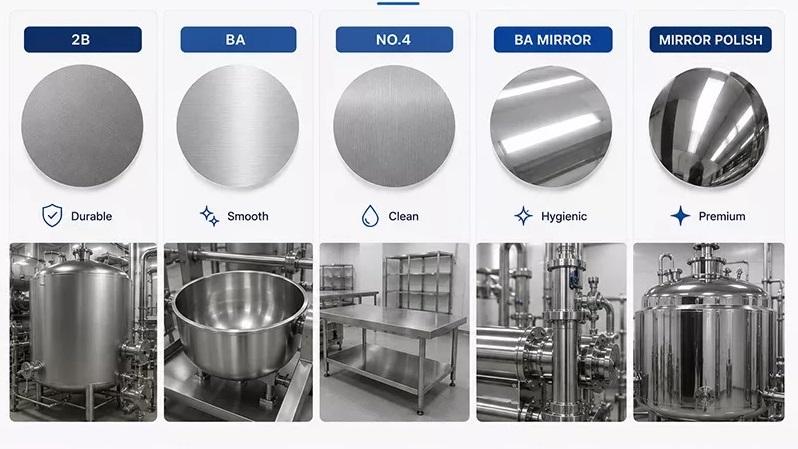 Sanitary stainless steel IBC guide for food and pharmaceutical applications. Learn about Ra ≤ 0.8µm mirror polish, FDA compliance, CIP cleaning, and when to use 304 vs 316L.Industry Applications
 -
 Deep dive chemical industry IBC material guide. 10 chapters covering corrosion mechanisms, compatibility data, temperature/concentration limits, regulations, physical performance, 10-year TCO, a simple corrosion test, selection flow chart, and supplier verification checklist.Industry Applications
 -
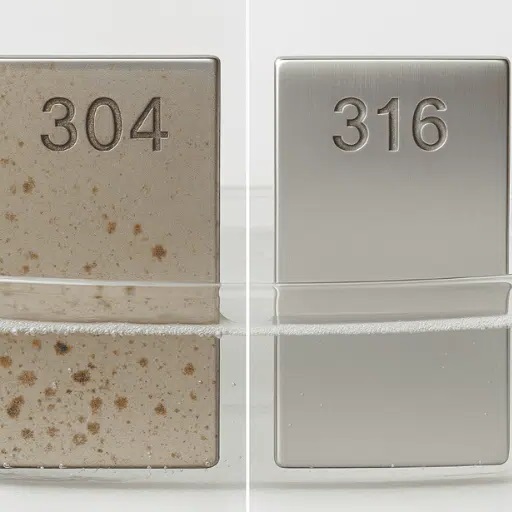 By Tom Chen, Sales Engineer at Flytech IBC(15 years in the stainless steel container industry)I'll never forget the call from a food processing plant in Ohio back in 2019.The owner was frustrated. He'd just spent nearly double on a fleet of 316 stainless steel IBCs because his "research" told him stTechnical Articles
