



Why Your 316 Stainless Steel IBC Might Be Overkill (And When You Actually Need It)


By Tom Chen, Sales Engineer at Flytech IBC
(15 years in the stainless steel container industry)
I'll never forget the call from a food processing plant in Ohio back in 2019.
The owner was frustrated. He'd just spent nearly double on a fleet of 316 stainless steel IBCs because his "research" told him stainless steel is stainless steel. Six months later, his accountant asked why container costs had spiked.
Here's the truth most suppliers won't tell you: For about 60% of applications, 304 stainless steel works just as well as 316L. And in some cases, 316L is actually the wrong choice.
Let me walk you through what I've learned from 15 years of helping customers make this decision—and save money.
The Stainless Steel Family: Not All Created Equal
First, a quick primer.
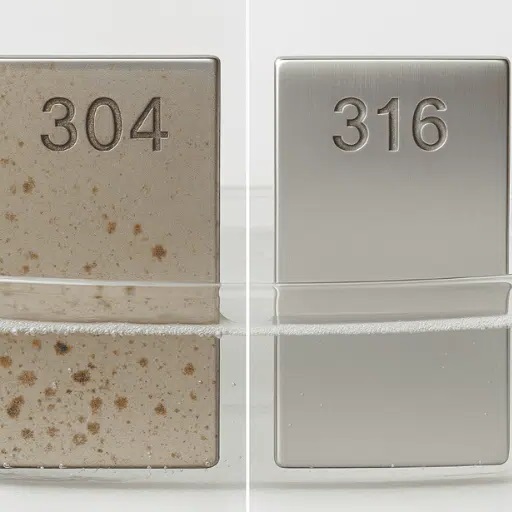
304 Stainless Steel
Contains 18% chromium, 8% nickel
Excellent corrosion resistance in most environments
The "workhorse" grade for food, dairy, and general industrial use
Cost: Baseline
316/316L Stainless Steel
Contains 16% chromium, 10% nickel, plus 2% molybdenum
The molybdenum is the key—it adds resistance to chlorides and acids
"L" stands for low carbon, which improves weldability
Cost: 30-50% higher than 304

The Counter-Intuitive Truth: When 316L Is Overkill
Here's where it gets interesting—and where most salespeople won't guide you honestly.
1. Food Grade Doesn't Automatically Mean 316L
I was at a brewery last month. The owner proudly showed me their new 316L fermentation tanks. "Only the best for our craft beer," he said.
I asked: "What's the pH of your beer?"
"About 4.2," he replied.
Here's the thing: Beer, wine, dairy, edible oils—these products simply don't attack stainless steel aggressively enough to justify 316L. 304 handles them beautifully for decades.
I've seen 304 IBCs in dairy plants that have been running for 25 years with zero corrosion issues.

2. Plain Water? 304 Is Fine
This sounds obvious, but you'd be surprised how many specs I see calling for 316L in potable water applications.
Unless you're dealing with highly chlorinated water (and even then, it's debatable), 304 is perfectly adequate.
3. Most Solvents Don't Care About Molybdenum
Acetone, ethanol, methanol, mineral spirits—these organic solvents don't contain chlorides. They won't pit 304 any more than they'll pit 316L.
If you're storing solvents, you're paying a 40% premium for no real benefit.
The "You Actually Need 316L" Scenarios
Okay, so when should you reach for the 316L?
1. Chlorides Are the Enemy
Here's a simple rule: If your product contains salt, brine, or seawater, go 316L.
I worked with a chemical distributor in Houston storing calcium chloride brine. Their 304 IBCs started showing pitting within 18 months. We replaced them with 316L—that was 2017, and they're still running strong today.
2. Hot Acids Change Everything
Temperature dramatically accelerates corrosion.
At room temperature, 304 can handle sulfuric acid up to about 20% concentration. But at 60°C? That drops to maybe 5%.
If you're storing or transporting hot acids, don't mess around—spec 316L (or better). And always check compatibility charts; some acids need even higher grades.
3. Pharmaceutical and Biotech Applications
This isn't always about corrosion. Sometimes it's about consistency and validation.
The pharmaceutical industry loves 316L because its consistent chemistry means predictable performance. Plus, the low-carbon version (316L) welds beautifully without sensitization—important for clean-in-place (CIP) systems.
But here's the nuance: For oral solid dosage manufacturing (pills, powders), 304 is often sufficient. It's the liquid injectables and biologics where 316L becomes non-negotiable.
The Hidden Cost of "Just in Case" Specs
I see this all the time: An engineer specifies 316L "just to be safe." It's understandable—nobody wants to be the one who spec'd the wrong material.
But let's look at what that decision actually costs:
Factor | Impact |
|---|---|
Initial cost | 30-50% higher per IBC |
Fleet of 50 IBCs | $30,000 - $50,000 extra, easily |
Lead time | 316L can add 2-4 weeks vs 304 |
Repair/weldability | 316L requires more skilled welders |

A Simple Decision Framework
After 15 years, here's how I guide customers through this choice:
Step 1: Identify the aggressive agent
Chlorides? → 316L
Acids? → Check concentration and temperature
Nothing aggressive? → 304 is fine
Step 2: Consider the temperature
Above 50°C? → Be cautious; 316L often safer
Ambient only? → 304 works for most things
Step 3: Check industry standards
Pharmaceutical (injectables) → 316L expected
Food/beverage → 304 is standard
Chemical → Depends on the chemical (see Step 1)
Step 4: Calculate total cost of ownership
How long do you need this IBC to last?
5 years? 304 probably fine
20 years? 316L might justify itself in harsh environments
The Flytech IBC Approach
Here's what we do differently at our shop:
We don't automatically upsell you to 316L. We ask questions. We want to understand exactly what you're storing, at what temperature, and for how long.
Sometimes we recommend 304. Sometimes we recommend 316L. And sometimes—like for a client storing extremely hot, concentrated acids—we recommend going beyond 316L to higher alloys like 904L or Hastelloy.
Because the right container isn't the most expensive one. It's the one that does the job without wasting your money.

A Final Thought
That Ohio food processor I mentioned earlier? After we walked through his actual needs, we replaced half his 316L fleet with 304 units for the applications that didn't need the premium grade.
He saved $47,000 and got exactly the same performance.
Next time someone tells you "stainless steel is stainless steel," or worse, "you should just get 316L to be safe," ask them: "Based on what?"
If they can't tell you specifically why your application needs molybdenum, you might be paying for performance you'll never use.
Got a specific liquid you need to store? Shoot me an email at [admin@stainlesssteelibc.com] with your product, temperature, and concentration. I'll tell you straight up which grade makes sense—304, 316L, or something else entirely. No pressure, just honest advice.
Related Blogs
-
 By the team at Shijiazhuang Fulait Packaging Co., LTDLast year, a tomato paste processor in California called us with a problem.Their plastic IBCs were failing after 18 months. Not leaking—but the inside surface had gone rough. Like sandpaper. Every batch was picking up microscopic bits of plastic.TIndustry Applications
 -
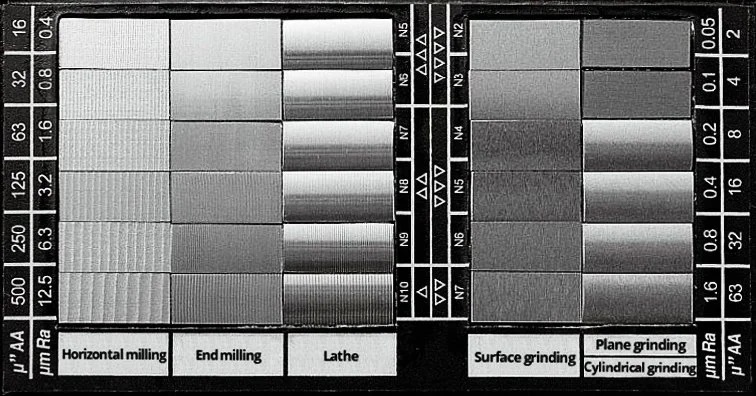 By the team at Shijiazhuang Fulait Packaging Co., LTDA quality manager at a generic drug manufacturer in India called us with a headache.Their auditor had flagged their stainless steel IBCs. Not for contamination—for "lack of documented surface finish specifications."The auditor's question: "How doIndustry Applications
 -
 By the team at Shijiazhuang Fulait Packaging Co., LTDI've been answering customer emails for 15 years.Some questions come up so often, I could answer them in my sleep.Here are the top 7—and the honest answers, not the sales pitch.Q1: "How long will a stainless steel IBC last?"Short answer: 20+ yearsFAQs
