



Frequently Asked Questions about Stainless Steel IBC Tote


Stainless Steel IBC Tote FAQ: 8 Questions Buyers Ask
I've been answering customer emails for over a decade. Some questions come up every week.
Here are the eight most common questions about stainless steel IBC totes — and the honest answers.
1. How long will a stainless steel IBC tote last?
Short answer: 15 to 25 years with proper care.
Long answer: it depends on what you store and how you maintain it. A 304 tote storing water or edible oil will outlast a 304 tote storing chlorides. The material matters. The maintenance matters more.
I've seen 304 totes from the early 2000s still in service at a dairy. I've also seen a new tote ruined in two years by neglect.
2. 304 or 316 — which one do I need?
This is the question I hear most.
Use 304 for: water, edible oils, syrups, juices, most solvents, detergents.
Use 316 for: salt water, brine, chlorides, dilute acids, pharmaceutical intermediates.
If you're not sure, test it. Put a small piece of 316 stainless steel in a jar with your liquid. Leave it for 7 days. If it shows pits or rust, you need 316. If it's clean, 304 will work.
304 vs 316 material selection guide
3. Can I clean it with bleach?
No.
Chlorine-based cleaners attack stainless steel. They cause pitting — small holes that grow over time. Even diluted bleach can do damage if left to sit.
Use alkaline or acid cleaners designed for stainless steel. Follow the manufacturer's instructions. Rinse thoroughly.
4. What's the standard valve size?
Most stainless steel IBC totes come with a 50mm ball valve. It's the industry standard.
For thicker liquids, a butterfly valve works better. For corrosive chemicals, choose PTFE-lined. For sanitary applications, use a clamp-type valve.
If you're not sure, tell your supplier what you're storing. They'll recommend the right one.
5. Do I need UN certification?
Only if you're shipping hazardous materials.
UN certification means the tote has been tested and approved for dangerous goods transport. It comes with a certificate and UN markings on the tank.
For food, water, and non-hazardous chemicals, UN certification is not required.
If you're shipping flammables, corrosives, or toxics, you need it. And you need the paperwork to prove it.
UN dangerous goods transport regulations
6. Can I stack them?
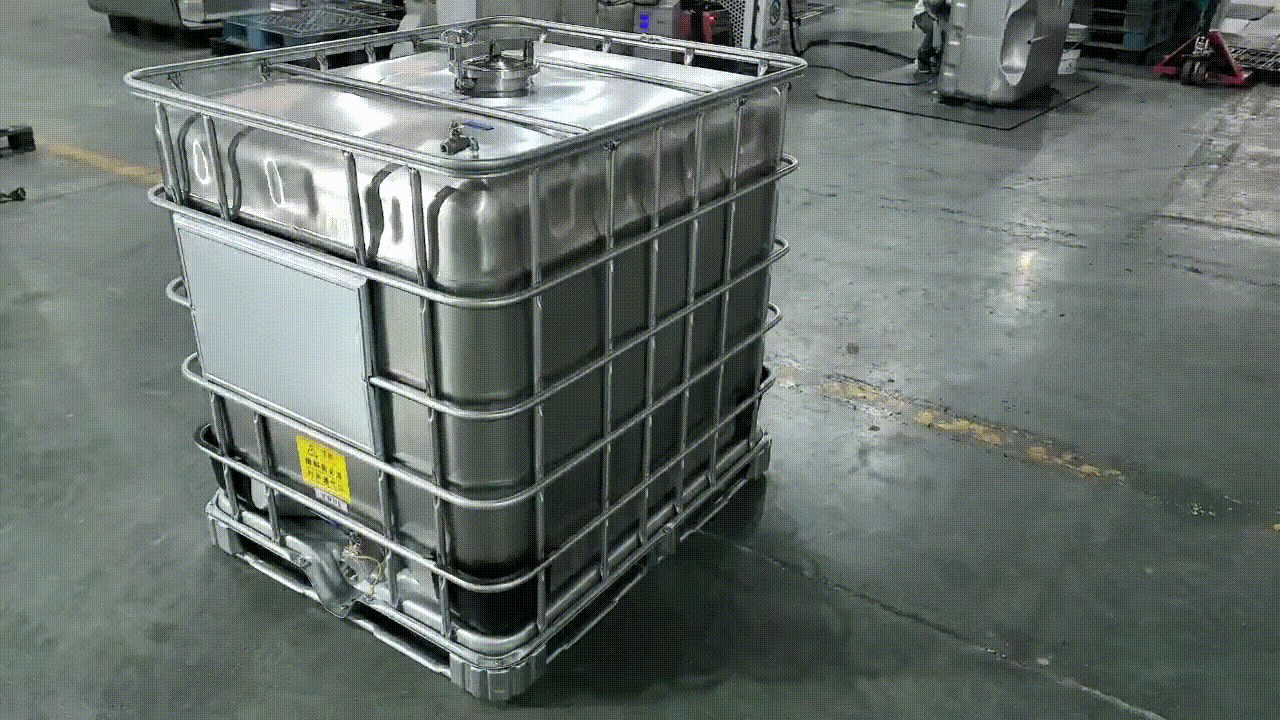
Yes — when full, stack two high. The steel frame handles the load.
Empty totes can be nested for return shipping. This reduces freight costs by up to 70%.
Do not stack three high unless the frame is specifically designed for it. Standard totes are not.
7. Can I put different products in the same tote?
Yes, if you clean it properly between batches.
The risk is cross-contamination. A tote that held onion oil will make the next batch of juice taste like onion — unless you clean it thoroughly.
For food-grade applications, follow a CIP cycle. For chemicals, ensure compatibility before switching products.
A juice plant in Thailand learned this the hard way. They didn't clean a tote thoroughly after storing chili oil. The next batch of orange juice was ruined.
8. What's the lead time?
Standard totes: 15 to 20 working days.
Custom totes: 25 to 35 working days, depending on complexity.
Lead times can be longer before Chinese New Year. Plan ahead if you're ordering in December or January.
Still have questions?
We've been building and shipping stainless steel IBC totes for over a decade. If you don't see your question here, send it to us.
Related Blogs
-
 Industry Applications
-
 Stainless steel or carbon steel IBC tote? This guide compares corrosion resistance, lifespan, and total cost so you can pick the right tank.Industry Applications
-
 By the team at Shijiazhuang Fulait Packaging Co., LTDI've been answering customer emails for 15 years.Some questions come up so often, I could answer them in my sleep.Here are the top 7—and the honest answers, not the sales pitch.Q1: "How long will a stainless steel IBC last?"Short answer: 20+ yearsIndustry Applications
