



What Is A Stainless Steel IBC Tote? A Plain-English Guide


What Is a Stainless Steel IBC Tote? A Plain-English Guide
If you work in chemicals, food processing, or pharmaceuticals, you've seen an IBC tote. They're the cube-shaped containers sitting on pallets in warehouses and loading docks. But not all totes are the same.
A stainless steel IBC tote is the durable end of the market. Unlike plastic totes, which degrade and need replacing every few years, a stainless steel tote can last two decades with proper care.
This guide explains what they are, how they're used, and when they make sense for your operation.
What Does "IBC" Stand For?
IBC means Intermediate Bulk Container. It's a container designed for bulk quantities — usually between 500 and 1500 liters — that can be moved by forklift or pallet jack.
The "tote" part is informal. In North America, people say tote. In Europe, they say IBC container or IBC tank. It means the same thing.
A stainless steel IBC tote is simply an IBC made from stainless steel instead of plastic or carbon steel.
How It's Built
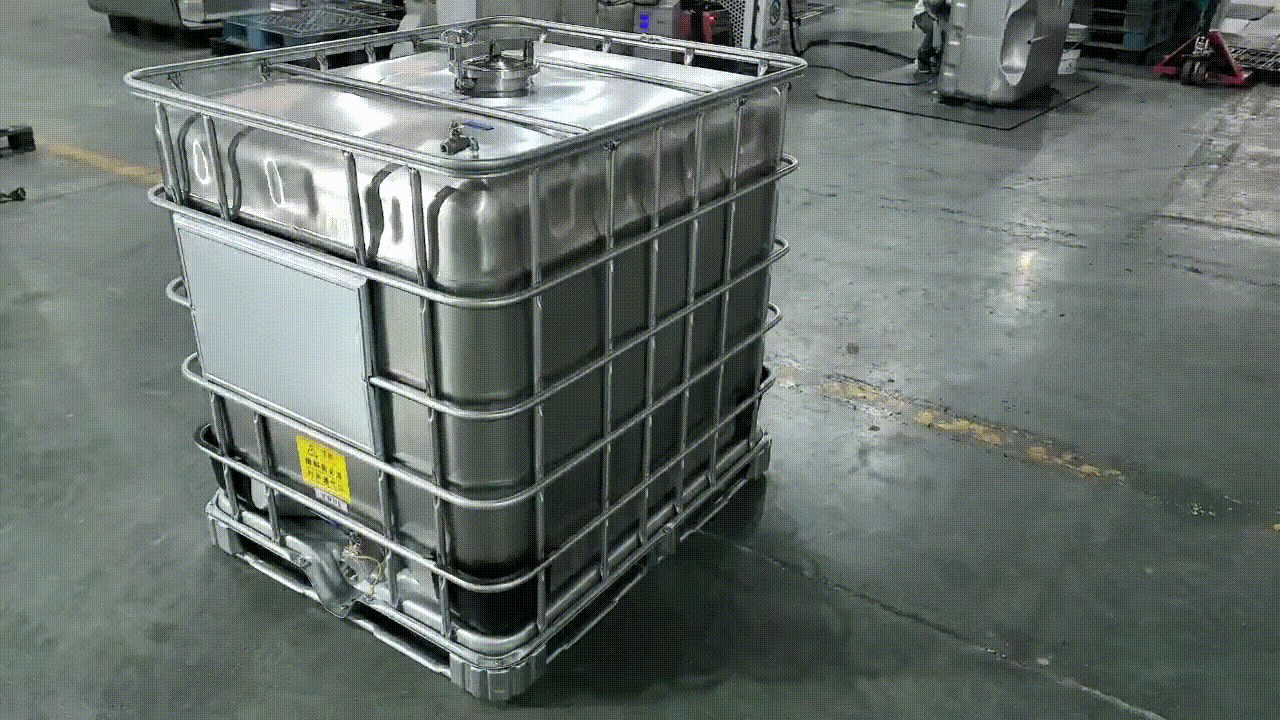
Every stainless steel IBC tote has four main parts:
The inner tank. This is the part that touches your product. It's usually 304 or 316L stainless steel, between 1.5mm and 2.5mm thick.
The outer frame. A steel cage or frame that protects the tank and allows stacking. On stainless steel totes, the frame is often stainless too.
The valve. Located at the bottom for draining. Standard size is 50mm. Options include ball valves, butterfly valves, and PTFE-lined valves.
The top opening. Usually a 150mm screw cap. Larger manholes are available for cleaning or adding dry ingredients.
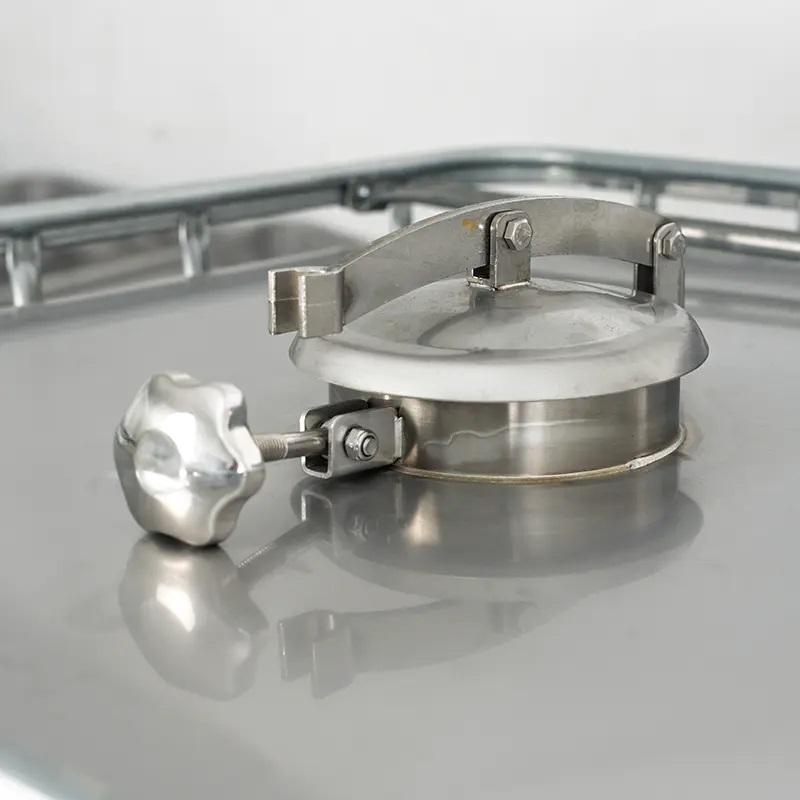
our stainless steel IBC tote product page
How It Differs from a Plastic Tote
Feature | Stainless Steel Tote | Plastic Tote |
|---|---|---|
Lifespan | 15–25 years | 3–5 years |
Temperature range | Up to 400°C | Up to 60°C |
Cleaning | Hot water, steam, CIP | Limited to 60–70°C |
Chemical resistance | Wide range | Limited |
Flavor absorption | None | Can absorb odors |
Resale value | 30–40% after 10 years | Zero |
A juice plant in Thailand switched from plastic to stainless steel after their orange juice started tasting like the previous batch. The flavor transfer disappeared immediately.
FDA requirements for food contact materials
When to Choose Stainless Steel
You need a stainless steel IBC tote when:
Your product is temperature-sensitive or requires hot cleaning
You store aggressive chemicals that attack plastic
You need long-term storage with minimal replacement
Your product is food-grade and flavor matters
You want resale value at the end of life
For short-term projects or non-corrosive liquids, plastic might be enough. But if you're planning for years, stainless steel pays for itself.
Related Blogs
-
 Industry Applications
-
 Stainless steel or carbon steel IBC tote? This guide compares corrosion resistance, lifespan, and total cost so you can pick the right tank.Industry Applications
-
 By the team at Shijiazhuang Fulait Packaging Co., LTDI've been answering customer emails for 15 years.Some questions come up so often, I could answer them in my sleep.Here are the top 7—and the honest answers, not the sales pitch.Q1: "How long will a stainless steel IBC last?"Short answer: 20+ yearsIndustry Applications
